Deploy corporate

Windows branding

without scripting.

Using this tool, you can create unlimited branding install packages containing the following.

Deploy these packages just like you would deploy any standard application, like Google Chrome or Adobe Reader, using Microsoft Endpoint Configuration Manager or Microsoft Intune.

Accordion polish — mockup
Understand · Ask · Buy

Everything you might be wondering

01 What does the Personalization Packager do?

Your Windows device branding journey starts here.

The Personalization Packager (also known as the Windows Branding Tool) is an excellent tool with a simple interface that helps you create powerful brand installation packages for your Windows 10 & 11 fleet — containing desktop wallpapers, lock screens, Outlook signatures, Teams backgrounds, and screensavers. Download the tool free from the Microsoft Store.

02 What is a Personalization Package?

A Personalization Package (also known as a Branding Package) is a single deployable unit created by the Personalization Packager — the Windows Branding Tool.

Each package can contain any combination of desktop wallpapers, lock screen images, Outlook signatures, Teams backgrounds, and video screensavers, alongside optional device and user scripts. A single organisation can deploy up to 12 packages side-by-side on each device.

Once created, the package is deployed via Intune, Configuration Manager, or any MDM platform capable of delivering a standard Windows install package.

03 Do the packages run locally?

Yes. Once deployed, the branding packages run locally on your machine — no data is sent to or processed by any third-party provider, and nothing crosses into external network domains or tenants.

  • Desktop backgrounds — all operations performed locally on your device, with no external correspondence.
  • Lock screen images — all operations performed locally on your device, with no external correspondence.
  • Microsoft Outlook email signatures — most operations performed locally on your device. If your users are in Entra ID or use Outlook New / Outlook Web, you'll need to configure one or more Azure services — still fully within your organisation's management and control. For Outlook Classic, it's all local.
  • Teams background images — all operations performed locally on your device, with no external correspondence.
  • Video screensavers — all operations performed locally on your device, with no external correspondence.

If you're in the government or banking sectors, our 'all-local' approach makes this branding deployment method particularly suitable and aligned with strict security frameworks.

You can deploy the branding packages using software deployment tools such as Microsoft Endpoint Configuration Manager, Microsoft Intune, or similar solutions. Once deployed, all operations occur locally on the device.

04 How do I deploy the packages?

Once a Personalization Package is created, it can be deployed to thousands of devices using standard software deployment tools — Microsoft Intune, Microsoft Endpoint Configuration Manager, or any comparable MDM platform.

Organisations can deploy multiple packages side-by-side on the same device. After deployment, the WPSecure engine on each device selects the highest Package version — or a specific version chosen by the Campaign Manager — for every branding item. You can install up to 12 personalization packages side-by-side per device.

Because all personalization items are staged locally on the device, the solution is well-suited to high-security devices and devices without internet access.

05 How much does it cost?

Install up to 12 personalization packages per device for US $1 / device / year.

You can use the Personalization Packager itself to create an unlimited number of branding packages at no additional cost. Devices that receive and install these packages are what's licensed — and each can run up to 12 packages side-by-side, covering any combination of desktop wallpapers, lock screens, Outlook signatures, Teams backgrounds, and video screensavers.

06 Trials, discounts, and refunds?

Download the full version of the Personalization Packager free from the Microsoft Store — no account required, no time limit. The best way to evaluate it is to use it.

At US $1 per device per year, this is already our best price — we don't offer additional discounts. And because we offer a fully functional free trial, we don't offer refunds either. We encourage you to try before you buy.

Subscriptions can be cancelled any time through the billing portal. Your subscription stays active until the end of your current billing period.

$1 USD per device per year  ·  Pricing calculator

What will it cost your organisation?

Move the slider to your fleet size and see how Windows Branding Tool compares to a typical per-user SaaS subscription — instantly.

Number of devices in your fleet
500 devices
500 devices 50,000 devices
Typical SaaS signature tool
annual cost
$90,000
at $1.50/user/month — signatures only, no desktop branding
Estimated annual
saving
$85,000
every year, on a like-for-like comparison
$1 USD per device per year. Minimum purchase: 500 device licences. Subscription renews annually.
Deployed via Microsoft Intune or MECM — no new infrastructure required. SaaS comparison based on $1.50/user/month.
No data leaves your environment
Deploy like any standard app
Works with Intune and MECM
Features

Everything in one tool.

  • Build stunning branding packages in just a few clicks
  • Everything stays within your network environment
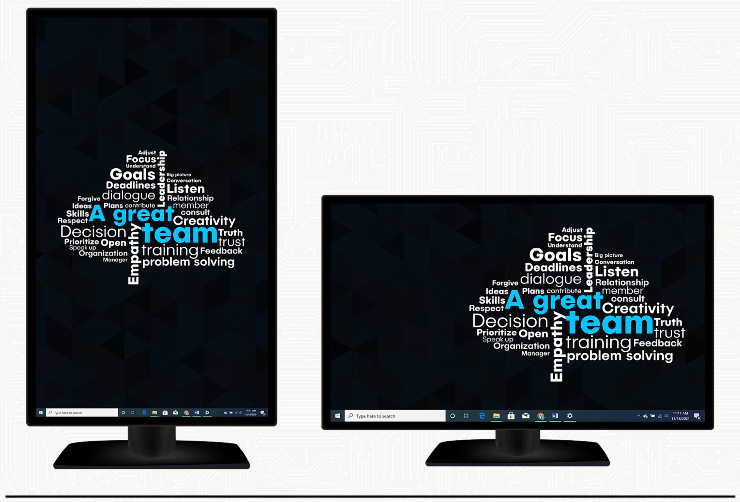
  • Desktop backgrounds for Portrait and Landscape monitors
  • Lock screen images for Portrait and Landscape monitors
  • Outlook signatures for New, Reply/Forward messages
  • New Outlook, Outlook Web, and Classic Outlook surfaces
  • Deploy a MP4 video file as a Windows screensaver
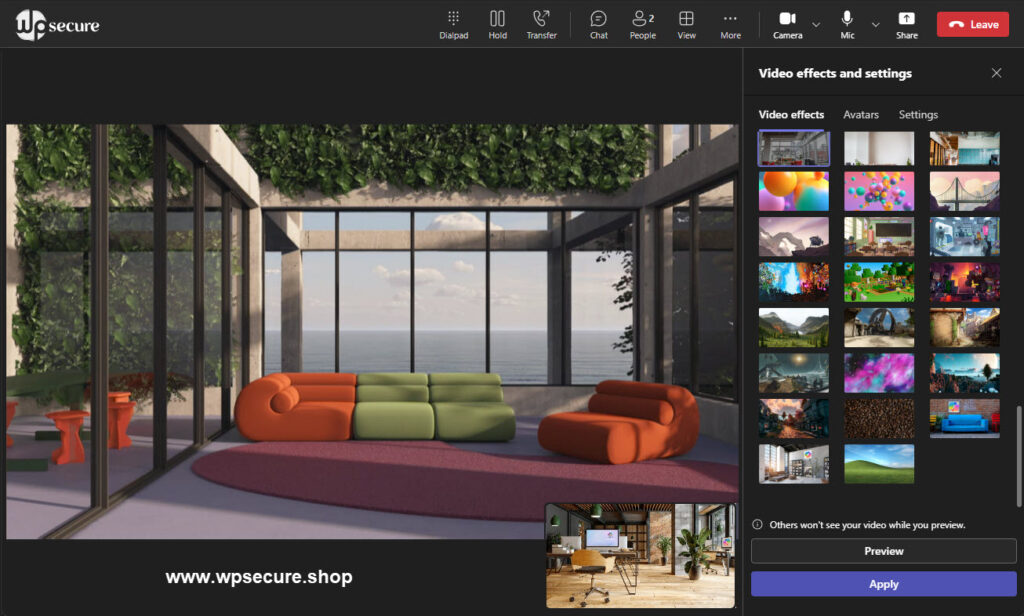
  • Deploy one or more Teams background images
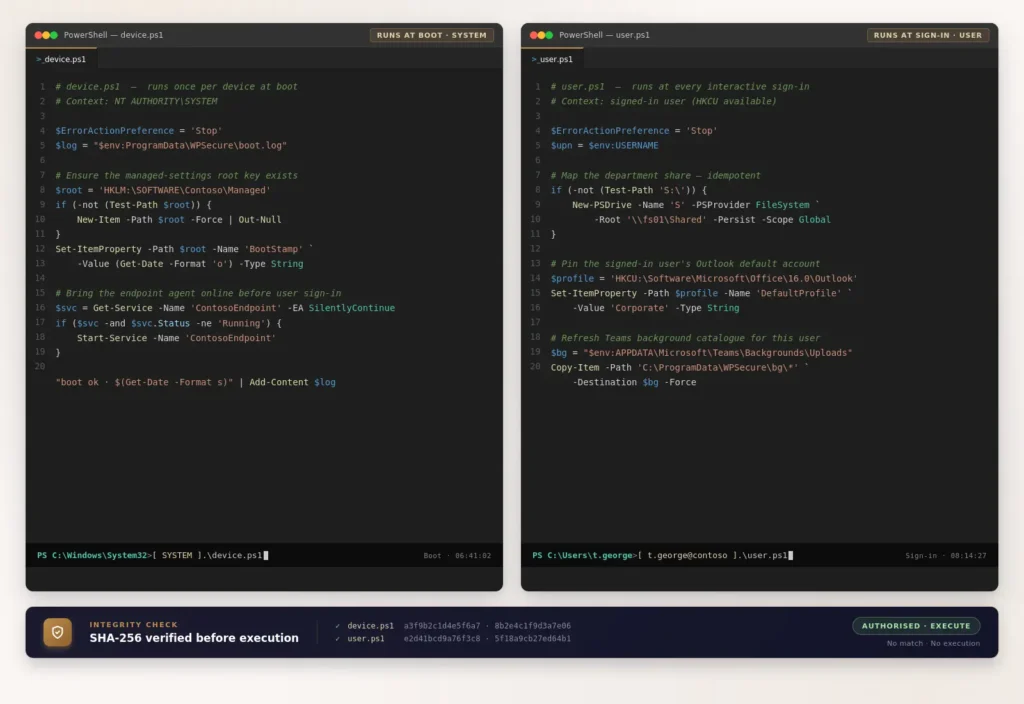
  • System startup and user login Powershell scripts
  • Generates silent installers for Intune and MECM (SCCM)
  • Install multiple packages side by side on each device
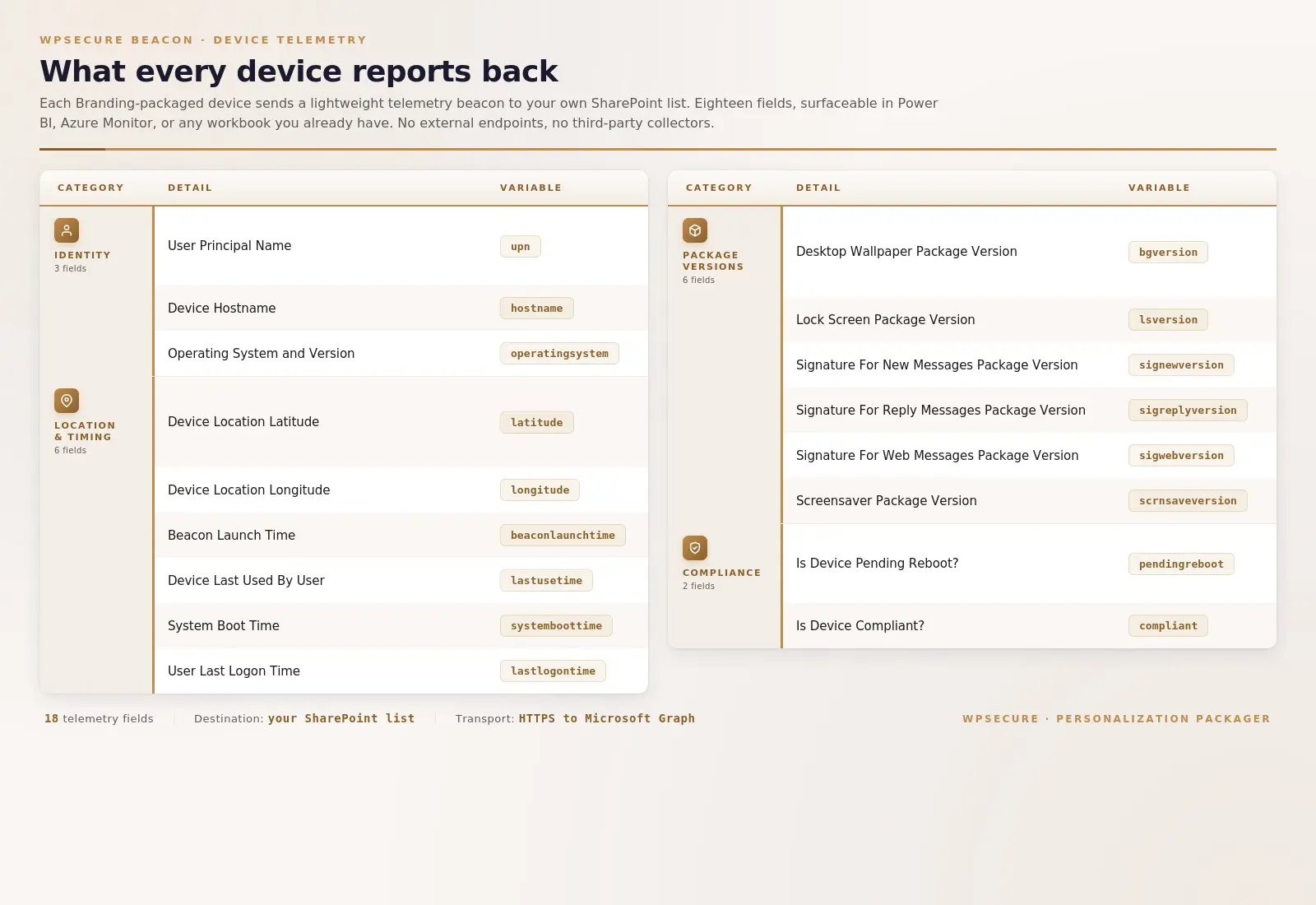
  • Report system boot time, user login time, package version etc
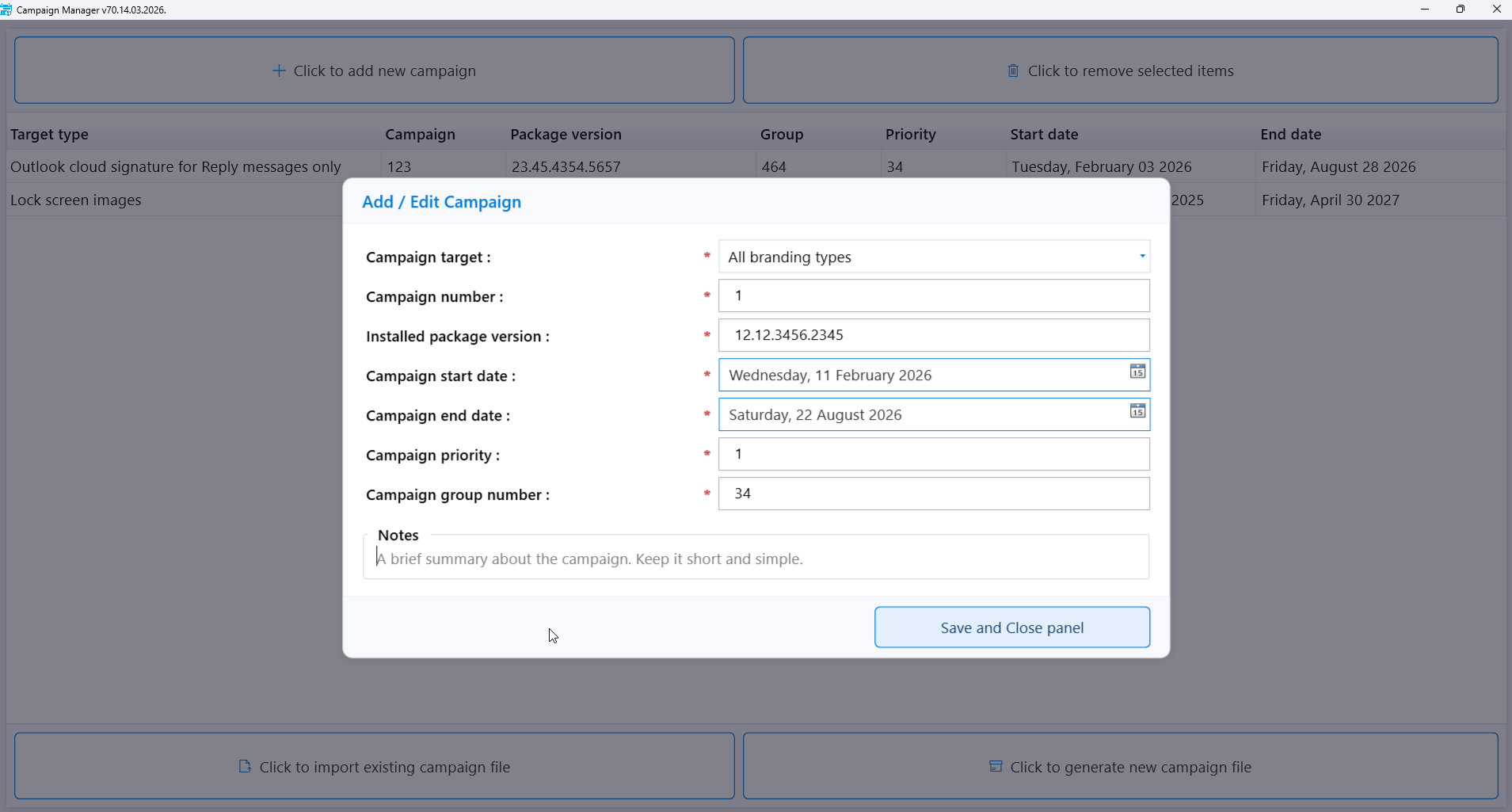
  • Use Campaign manager to start specific packages on a schedule
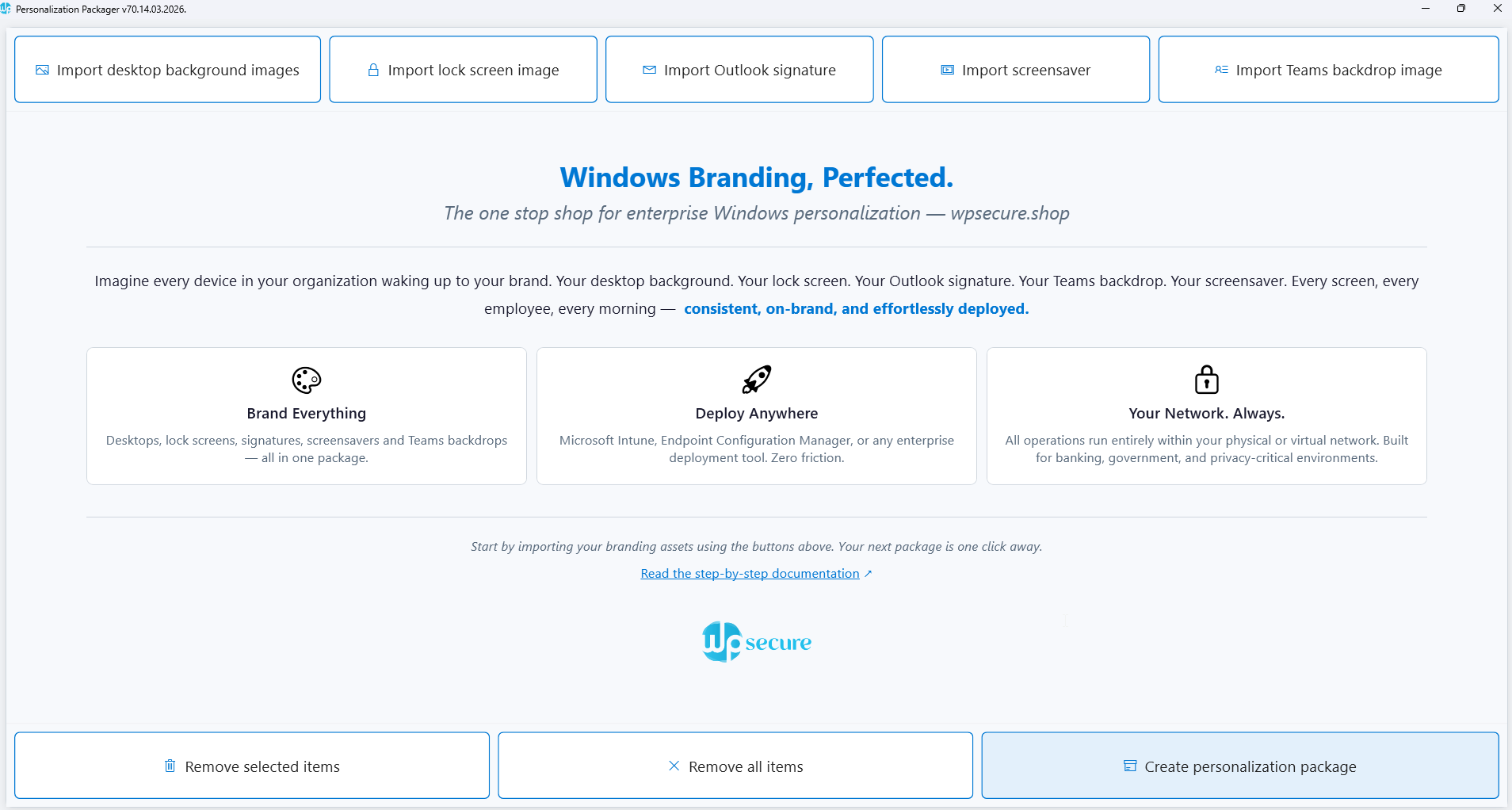
Windows Branding Tool — Personalization Packager
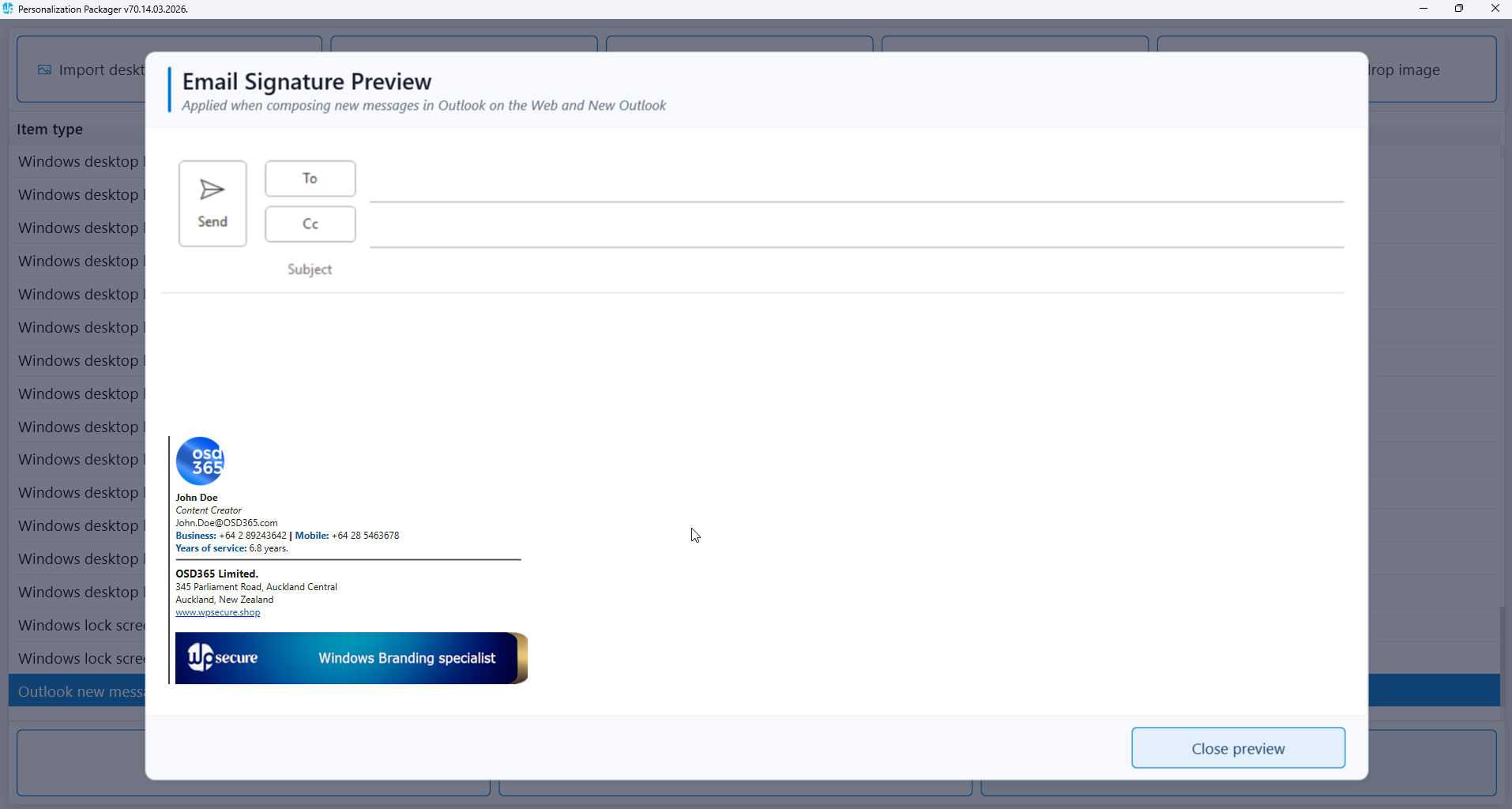
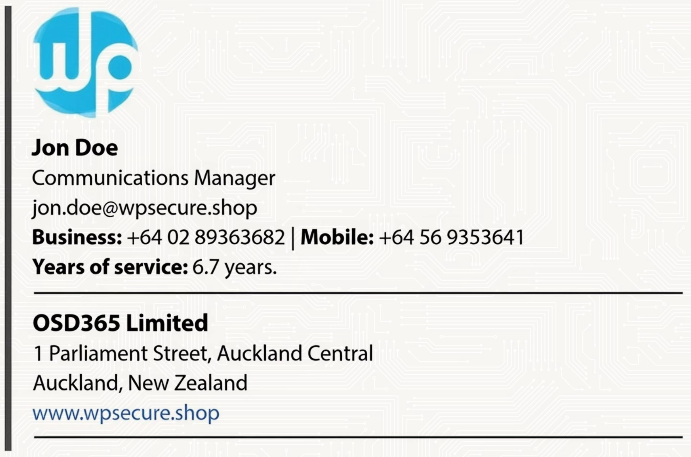
Outlook signature preview
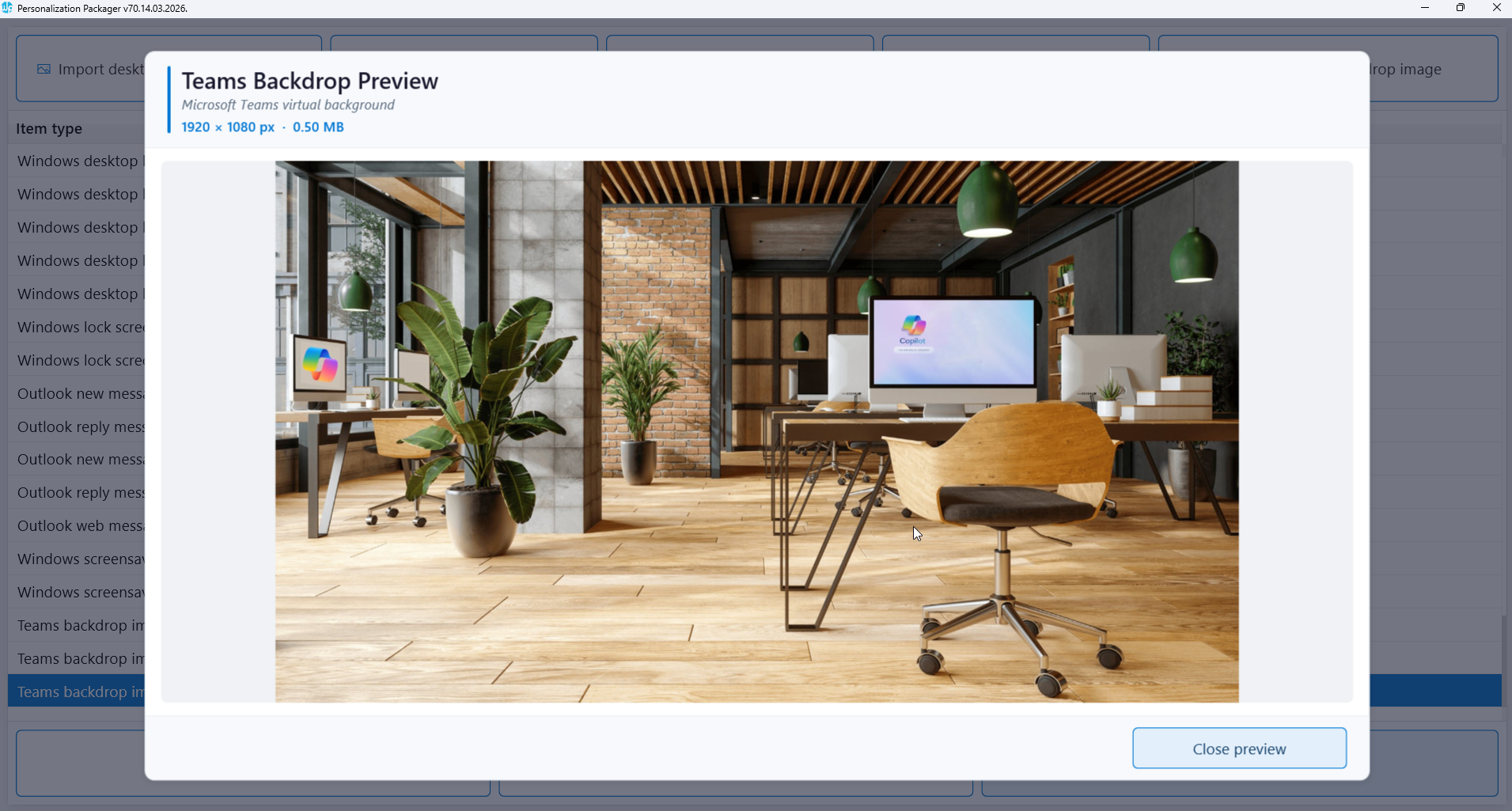
Teams backdrop preview
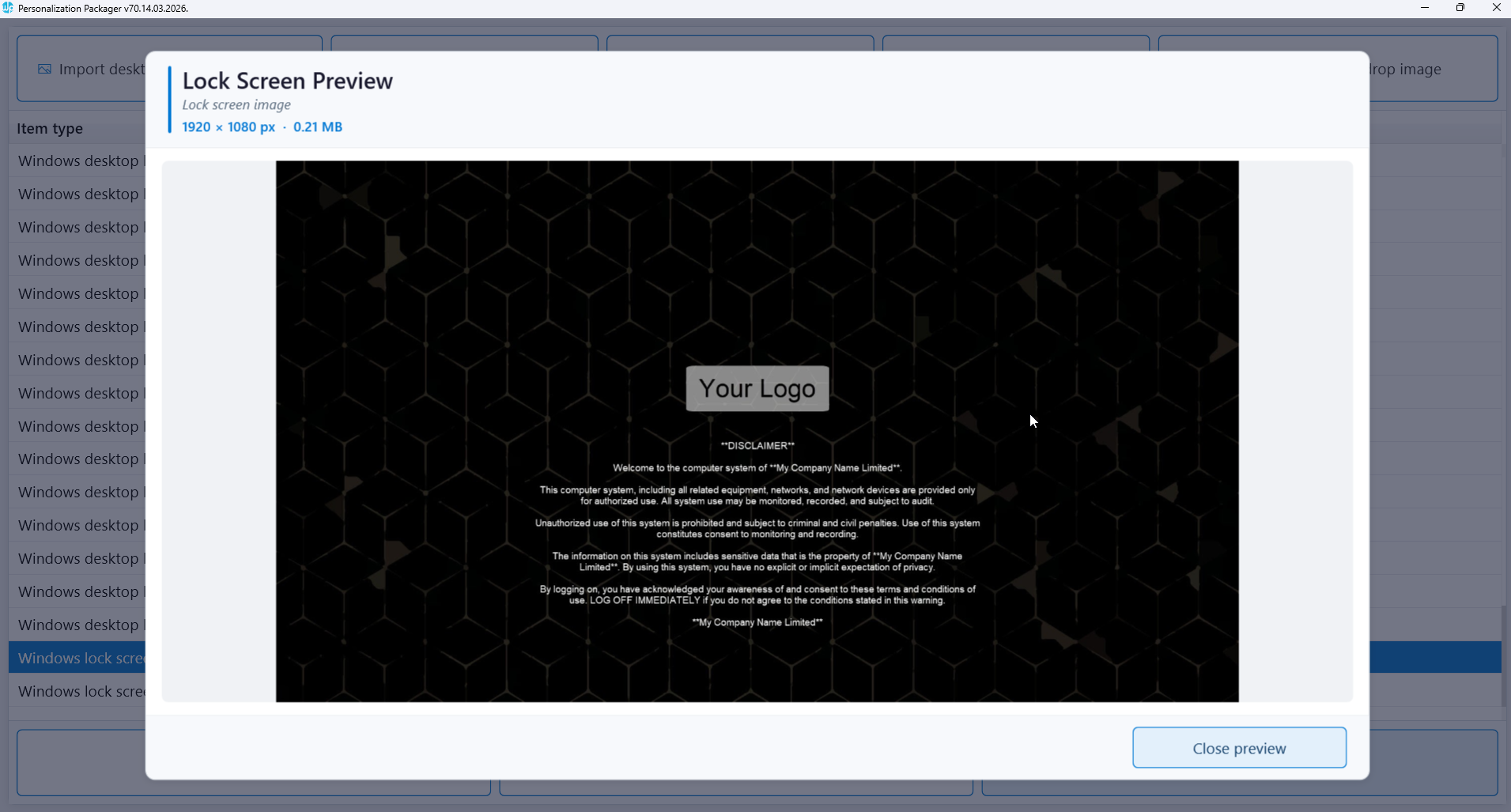
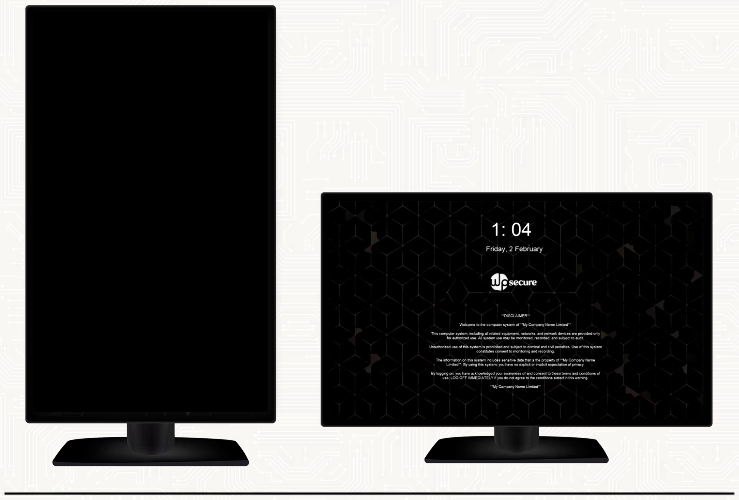
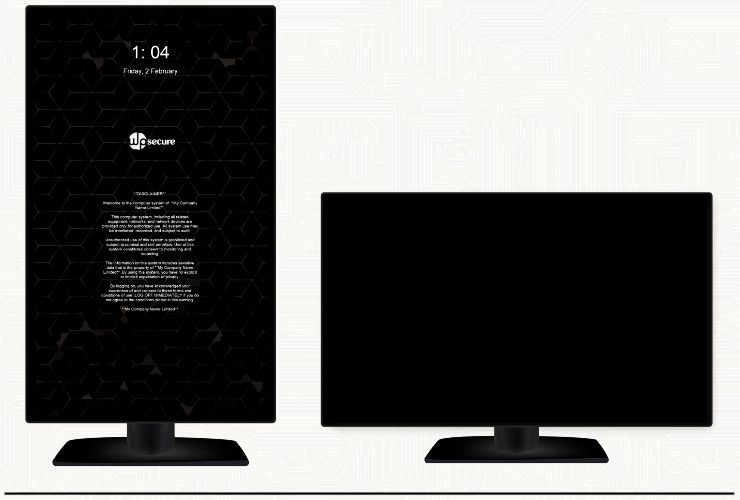
Lock screen — landscape
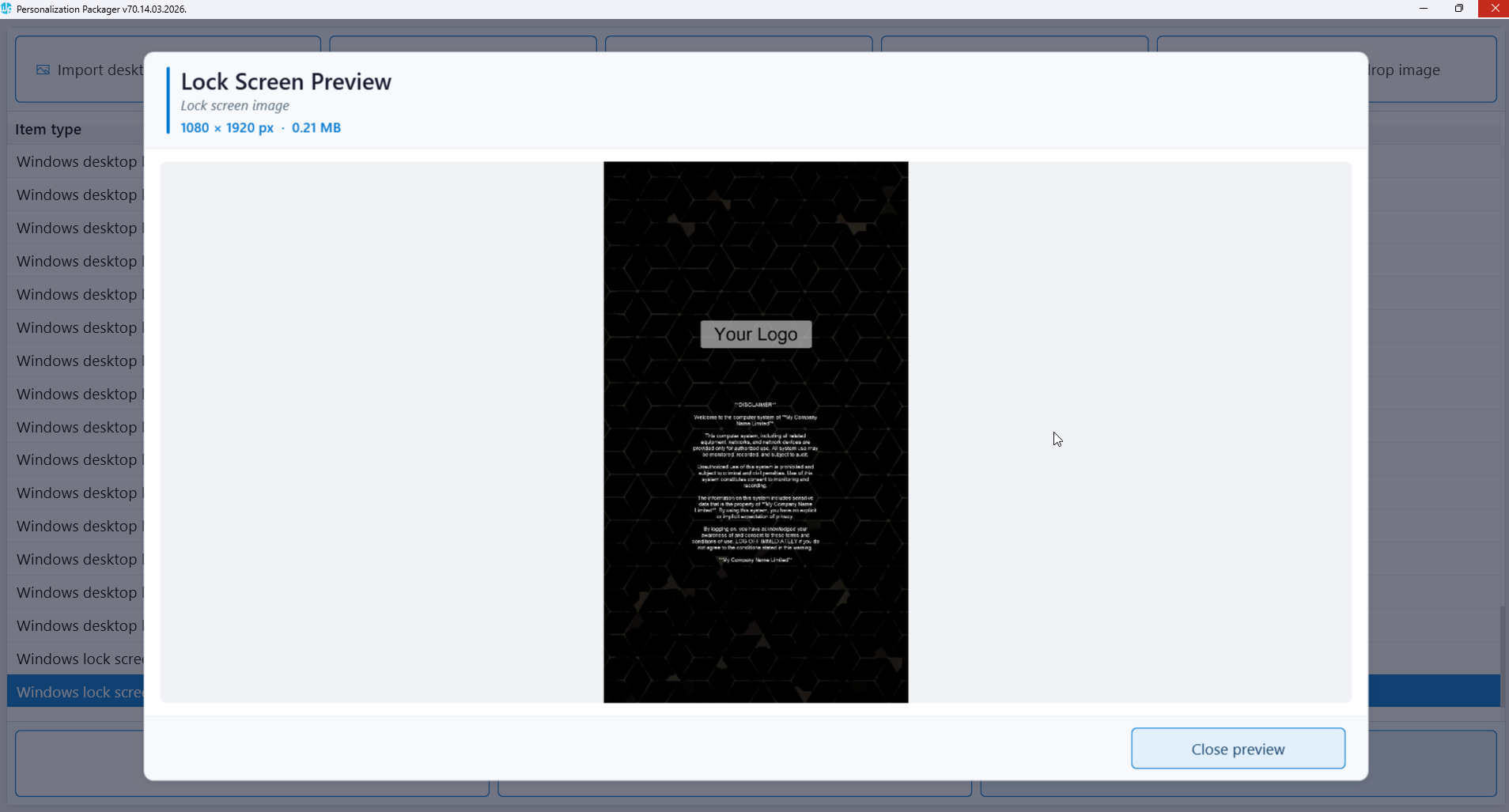
Lock screen — portrait
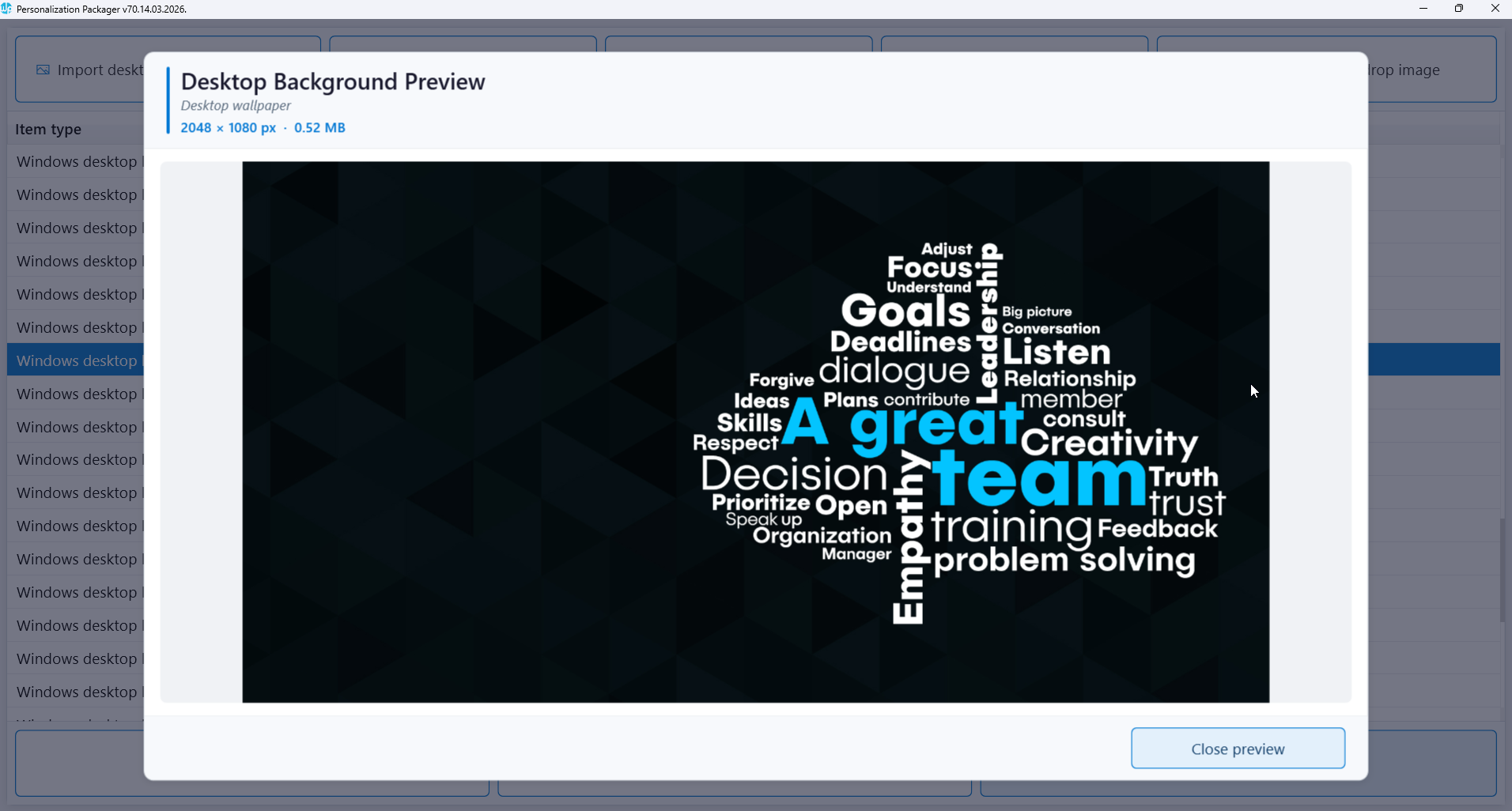
Desktop background — landscape
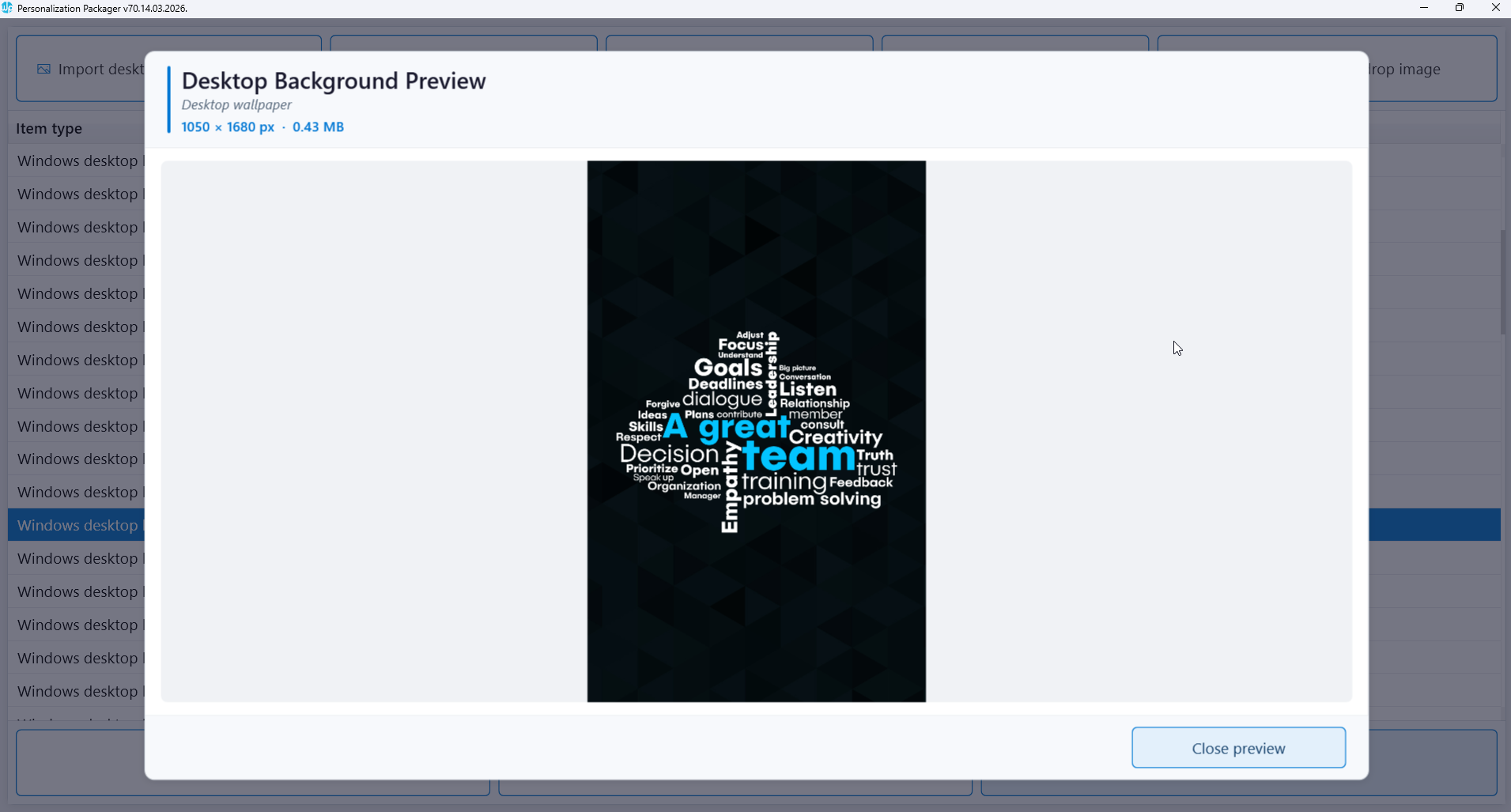
Desktop background — portrait
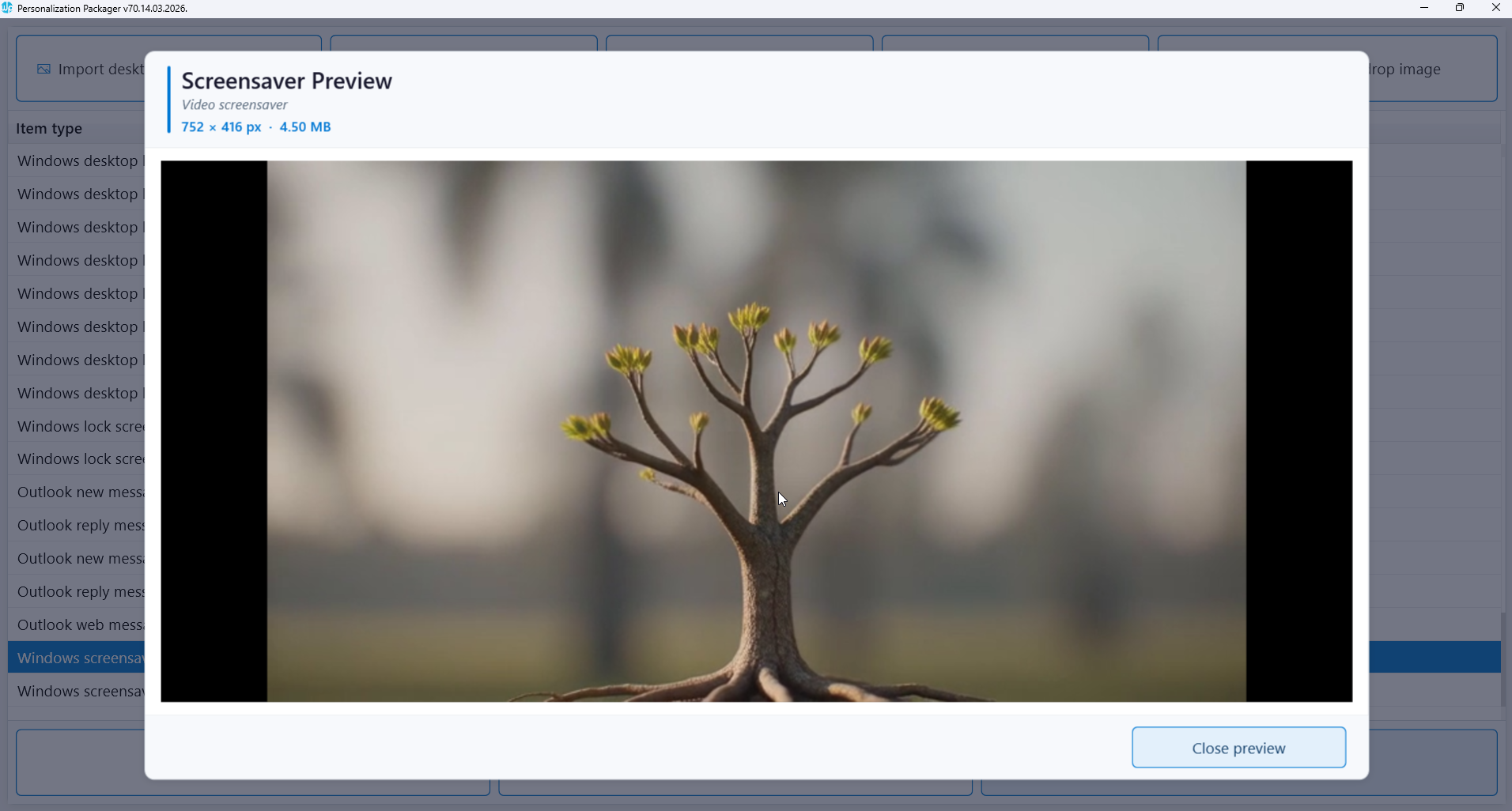
Video screensaver — landscape
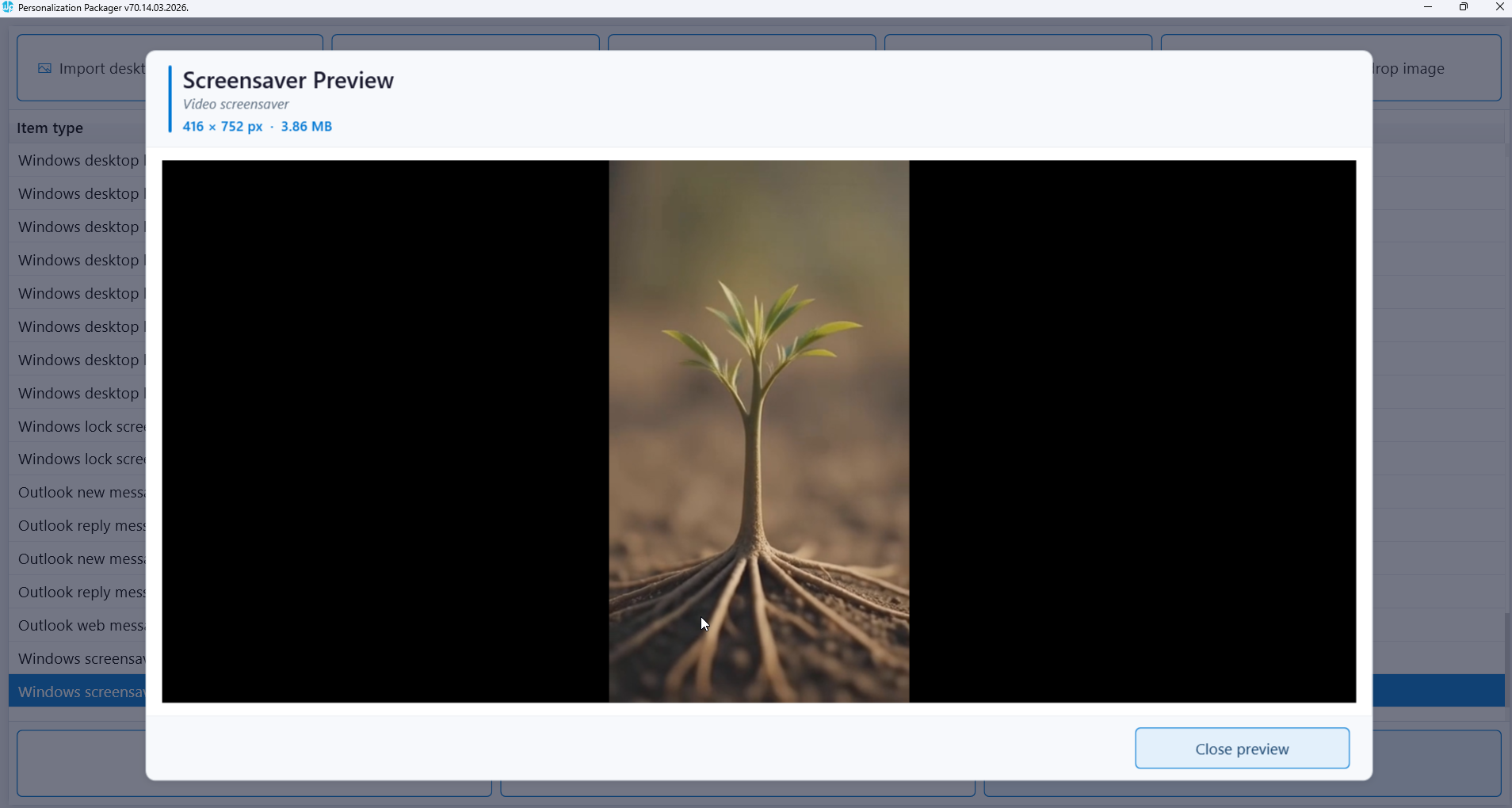
Video screensaver — portrait
Set Windows desktop wallpaper

Have you struggled getting desktop backgrounds right across a mixed fleet?

Most organisations run both orientations — landscape and portrait monitors at desks, portrait displays at reception, in branches, and landscape screens only in hot-desk rooms. Push a single landscape image to every device and the portrait screens stretch it, squash it, or crop it into something that doesn't look like your brand any more.

The Branding package deploys the right image to the right screen. Landscape assets go to landscape displays, portrait assets go to portrait displays, and when a user docks or rotates, the wallpaper adjusts automatically. One package, every device, correctly sized.

Set Windows lock screen

Have you ever needed a legal disclaimer with a logo to appear on every locked device — and had it fail on half of them?

Lock screens are where your compliance message lives. The warning about authorised use, the reminder about data handling, the statement required by your auditor. But getting the right image onto every device, sized correctly for both landscape and portrait displays, and refreshed when the wording changes, is rarely as simple as it sounds.

The Branding package handles it locally on each device. Landscape image for landscape screens, portrait image for portrait screens, and the lock screen refreshes at the triggers you choose — boot, login, or on a schedule. The disclaimer is there every time the screen locks. On every device. Without exception.

Set Windows screensaver

Have you ever wanted every idle screen in the building to show the same message — and realised there's no easy way?

Screensavers are the most overlooked communications channel an organisation owns. Every desk, every meeting room, every reception area has one — and when a device is idle, that's exactly when people glance at it. A safety reminder, a new initiative, a product launch. Something that would get skimmed in email lands differently when it's playing on the screen in front of someone.

The Windows Branding tool takes an MP4, wraps it into a deployable package, and sets it as the screensaver on every device. Landscape video for standard monitors, portrait video for vertical displays, and the whole thing runs locally — no streaming, no external dependencies. Your message, on every idle screen, the moment someone looks up.

The Best Outlook Email Signature
Set Microsoft Outlook signature

Have you had to say no to a signature management tool because it routes your email through someone else's tenant?

Most signature tools work by intercepting mail in transit — applied via a transport rule, a connector, or a third-party service that sits in the mail flow. For a lot of organisations, particularly in finance, government, and defence, that's a non-starter. Compliance doesn't care how convenient the tool is. Email can't leave the tenant.

The Branding packages applies signatures locally on each device. The template is deployed through Intune or MECM, user attributes are substituted from Entra ID, and the signature appears in New Outlook or Outlook Web using a web-addin, and Classic Outlook locally — with separate templates for new messages and replies. No transport rules. No connectors. No mail routed through anything outside your tenant.

Set Microsoft Teams backgrounds

Have you ever joined a client call and noticed someone's Teams background is a holiday photo?

Teams lets users upload their own backgrounds, which means every external meeting is a lottery — one person has the approved brand backdrop, the next has a blurred kitchen, the third has something from last summer. There's no way in Teams itself to push a curated set and say "use these."

The Branding package deploys one or many approved backgrounds to every device, silently and centrally. Users get a consistent set to choose from, and when branding changes, a single redeploy replaces the old images. On-brand from the first second of every call.

Save analytics to SharePoint

Have you ever needed a simple answer to "which devices did this user sign into last month?" and not had anywhere to look?

Most organisations collect device telemetry through Intune, through Entra sign-in logs, or through whatever monitoring tool they've licensed — each with its own retention window, its own query language, and its own cost. For straightforward operational questions, none of it is particularly easy to reach.

A device with a Branding package can post a scheduled beacon to a SharePoint list — which device, which user, last logon, boot time, location. No new platform, no additional licence, no data leaving your tenant. Operational visibility, in a SharePoint list, at whatever cadence you want.

Device & user scripts

Do your login scripts fire one session and skip the next — and do your startup scripts run on a schedule rather than at boot?

On cloud-joined Windows devices, running the old certainties has quietly become hard work. User-context login scripts arrive late or miss a session entirely, so the drive map or Outlook profile tweak that used to be boring is now a support ticket. Device startup scripts run on a platform schedule rather than at actual boot, which is the wrong moment for half the things that need to happen first. And once a script lands on disk, nothing verifies that the file executing today is the same file you signed off last quarter.

A device with a Branding package can run true device startup scripts at boot and true user login scripts at sign-in, both in the correct security context and both hash-verified before they execute. If the script on disk doesn't match the hash, it doesn't run. The certainty of a GPO-era login script, on a cloud-joined device.

The campaign manager

Have you ever tried to coordinate a brand rollout across a 12-month calendar?

Every organisation has seasons of brand change. A new quarter brings a new campaign. A rebrand lands and needs to appear everywhere at 9am on a Monday. A safety message takes over lock screens for two weeks in August. In most environments this kind of coordination lives in a shared calendar and a lot of hoping that regional IT teams remember the schedule.

The campaign manager plans the whole year as one file. You define which package runs when, in what order, and at what priority — filtered by group, start date, and end date — then deploy that schedule as a single campaign through Intune or MECM. Devices execute the plan locally on the dates set. One plan, built months in advance, delivered automatically across every device.